How we operate
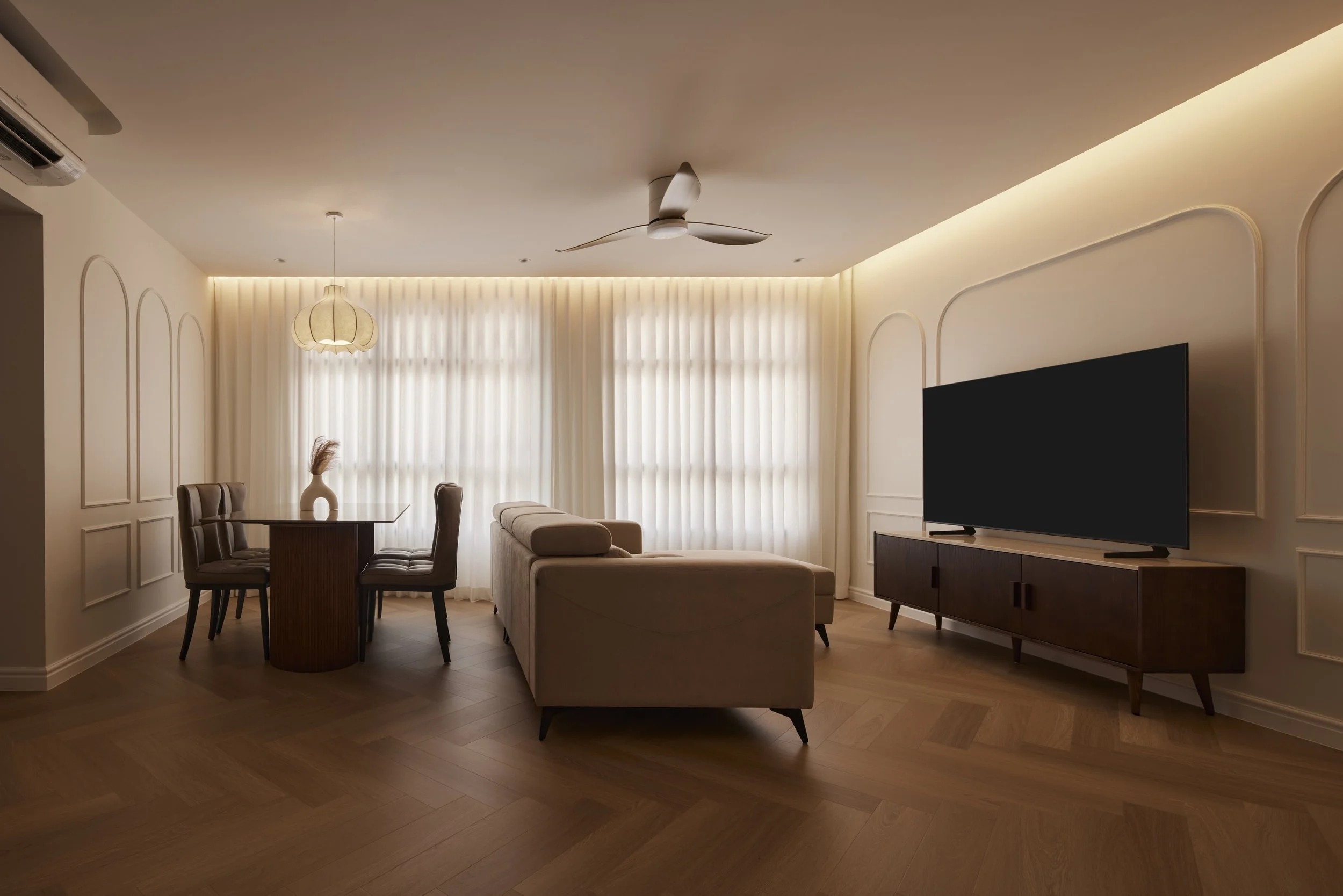
The manner we execute projects as a boutique firm is different from firms that operate as a platform.
With platforms, a designer is assigned and she will then be in charge of everything. We prefer to operate in functional teams comprising design, drawings, project management, supplier management etc. Our approach means at least four people are involved per project.
Upsides
I find this approach encourages more creativity, enables greater focus on our tasks and generally leads to a better outcome. I can think of a few reasons for this.
There’s usually a “switching” cost when moving between tasks. One cannot manage a construction site in the morning and be expected to do creative work in the afternoon, while having to handle client queries throughout the day. The output is much better when a person can do creative work, or site work all day long. Travel time is also minimised.
It is also comforting to have a few persons involved because it is a serious responsibility. We are each accountable for our own domain - and when everyone in the team is competent and easygoing, and we all pull our weight in the same direction, magic happens.
I also find this is good for team dynamics because we have to communicate with each other for projects to be executed well. This builds trust which ultimately contributes to company culture, the foundation on which great organisations are built. If nothing else, just this benefit alone is sufficient to justify our approach. I firmly believe in the management maxim “culture eats strategy for breakfast.” Right culture leads to solidarity and that is the ultimate shield against rainy weather.
For clients, they can have the confidence that their house will be built largely by the same people as the ones who built those that they see on our socials. With us, they just need to decide if the firm’s portfolio and approach is right for them.
Downsides
The most serious downside is that one bad employee can be quite damaging, because the person will be spreading her incompetence across multiple projects. It is also poor for team dynamics. I’m sorry to say that despite my best efforts, over the years, a few bad employees had slipped through the net. Thankfully, they do not last - the rigours of work eventually brings their shortcomings to light.
Another downside is limited capacity. We are currently but a small team of seven, and our processes are sufficient to support a maximum of four new projects per month. To be able to grow beyond this, processes must be rewritten.
New processes, one will find, is not simply a product of following management book advice or logical thinking. Advice serve as guides but processes must be experimented with, fine tuned and in some cases made obsolete. Like a plant, you keep the leaves and trim the weed. As a plant grows, so too an organisation’s processes - it cannot be rushed. The Silicon Valley mantra of “move fast and break things” cannot and must not apply. A subpar house is not the same as a subpar mobile application.
Lastly, when one person is in charge of the entire project, there is naturally a greater sense of ownership. When responsibilities are split, each of us will have different levels of attachment to the project. I’m sure this is influenced by factors such as how much we each like the design, the level of chemistry with the client, perhaps the type of property. This is understandable but not ideal.
This should lessen as company culture gets stronger and more defined. Specifically, when we become less attached to the ins and outs of a project and more to fulfilling our mission, then the sense of ownership will grow - it’s more what we collectively achieve, rather than what’s in it for me.
In future, everyone should have the same level of pride as I imagine people who work for BMW or our civil service have, by virtue of being part of a well-run organisation - ambitious, growth driven, determined to do good.
I started off by saying we are different from platform, but generally I believe the platform model can work with the right practices, and it is perhaps the best way to scale. My hats off to those who have managed to make the platform model work.